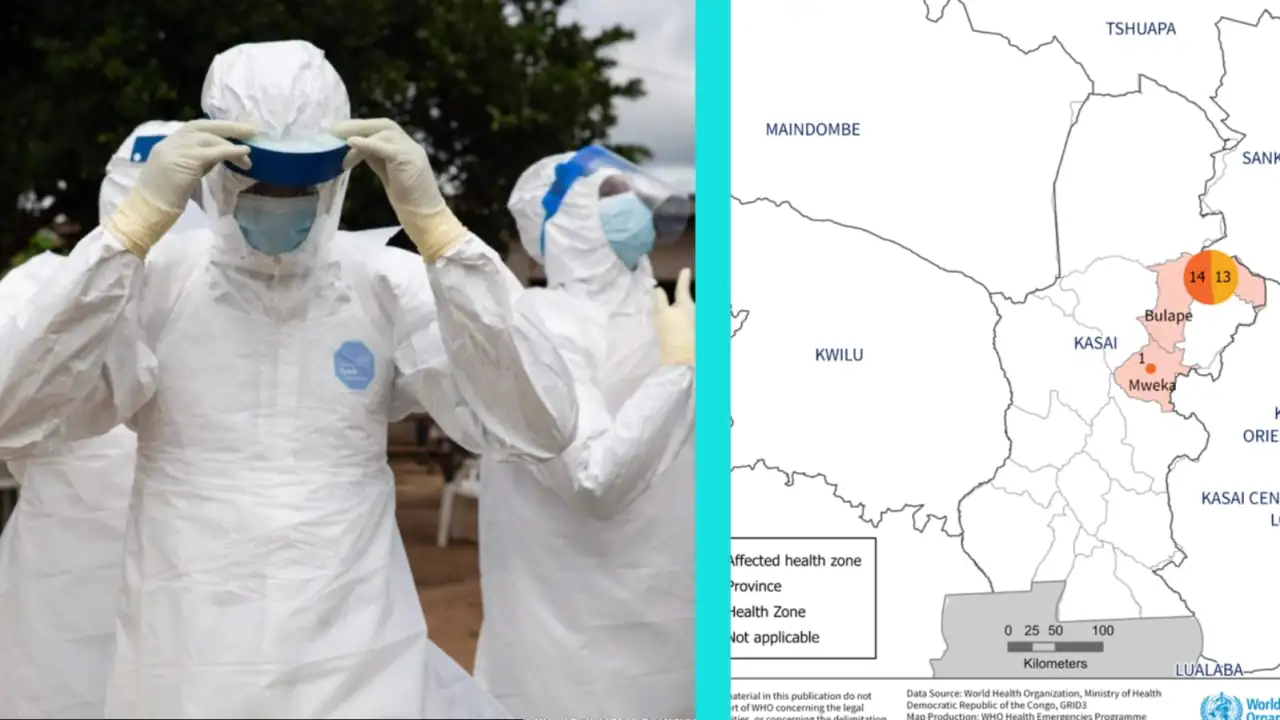
The Ebola virus disease outbreak, caused by the Bundibugyo virus strain, continues to escalate in the eastern provinces of the Democratic Republic of the Congo (DRC), prompting intensified response efforts from national authorities and international partners. As of July 3, 2026, the Ministry of Communication and Media has reported a significant rise in cases across Ituri, North Kivu, and South Kivu provinces.
According to the latest official figures:
▪️1,528 confirmed cases
▪️492 deaths
▪️239 recoveries
▪️628 patients currently receiving care
▪️81.5% of contacts under monitoring
In the past 24 hours alone, health authorities recorded 26 new confirmed cases and 26 new recoveries. Nearly 10,000 contacts remain under surveillance, with more than 500 having completed the standard 21-day follow-up period.
The outbreak, declared in mid-May 2026, has primarily affected Ituri Province, which accounts for the vast majority of cases. It has since spread to additional health zones in North Kivu and South Kivu, complicating containment due to the region’s complex humanitarian challenges, including conflict, population displacement, and cross-border movements with Uganda.
Response efforts focus on strengthened surveillance, patient isolation and care, contact tracing, community mobilization, and infection prevention. A WHO-backed clinical trial for potential treatments, including remdesivir and MBP134, began recently, offering some hope amid the absence of approved vaccines or specific therapies for this Bundibugyo strain.
Official Statements
Government of the Democratic Republic of the Congo (Ministry of Communication and Media):
“The Ebola response continues in Ituri, North Kivu and South Kivu, with strengthened surveillance, patient care and community mobilization. As of July 3, 2026: 1,528 confirmed cases, 492 deaths, 239 recoveries, 628 patients receiving care, and 81.5% of contacts being monitored. The ministry said 26 new confirmed cases and 26 new recoveries were recorded in the past 24 hours. Nearly 10,000 contacts remain under surveillance, while more than 500 have completed the 21-day follow-up period.”
World Health Organization (WHO):
“The Bundibugyo virus disease (BVD) outbreak in the Democratic Republic of the Congo continues to evolve rapidly, with sustained transmission and increasing numbers of reported cases. National authorities in the two affected countries, in collaboration with WHO and partners, are implementing an extensive set of response measures… The risk in the Democratic Republic of the Congo remains assessed as very high due to ongoing transmission and the continued expansion of the outbreak into new health zones.”
WHO has emphasized community engagement as critical to controlling the outbreak and advises against travel or trade restrictions while urging enhanced cross-border collaboration and preparedness in neighboring countries.
Health experts warn that the challenging security environment and high mobility in affected areas continue to hinder full containment. International support, including from the United States, Uganda, China, and various NGOs, is scaling up with additional funding, mobile labs, medical personnel, and supplies.
The situation remains fluid, with daily updates expected from Congolese health authorities and WHO. Public health officials stress the importance of early symptom reporting, safe burial practices, and avoiding contact with suspected cases to curb further transmission.